1. Before you wear colored contacts for the first time
Feeling nervous the first time you wear color contact lenses is totally normal. If you’re thinking about trying color contact lenses online for the first time, it’s important to choose safe, comfortable lenses instead of only chasing pretty colors.
In most cases, it is not the lenses themselves that hurt your eyes, but bad habits like not washing hands, wearing them for too long, or sleeping in them.
Before you try them on, it is better to:
-
Get a proper eye exam and ask your doctor about prescribed color contact lenses, especially if you have myopia or any eye condition.
-
Trim your nails so the edges are smooth and rounded to avoid scratching the lenses or your cornea.
-
Wash your hands thoroughly with soap and water, then dry them before touching the lenses.
-
Prepare solution, a clean lens case, and tools like tweezers or a small suction stick if you like using them.
If you use yearly HEMA lenses (around 42% water content), remember they require more serious daily cleaning and care.
Daily disposable lenses (around 55% water content) are more convenient, but even the best color contact lenses still cannot be worn for too long or slept in.
2. How to tell the right side from the wrong side
One of the most common beginner questions is: how do I know if the lens is inside out?
If you wear it the wrong way, you will usually feel more discomfort and the lens may move around.
A simple way to check:
-
Place the lens on the tip of your finger and look at it from the side.
-
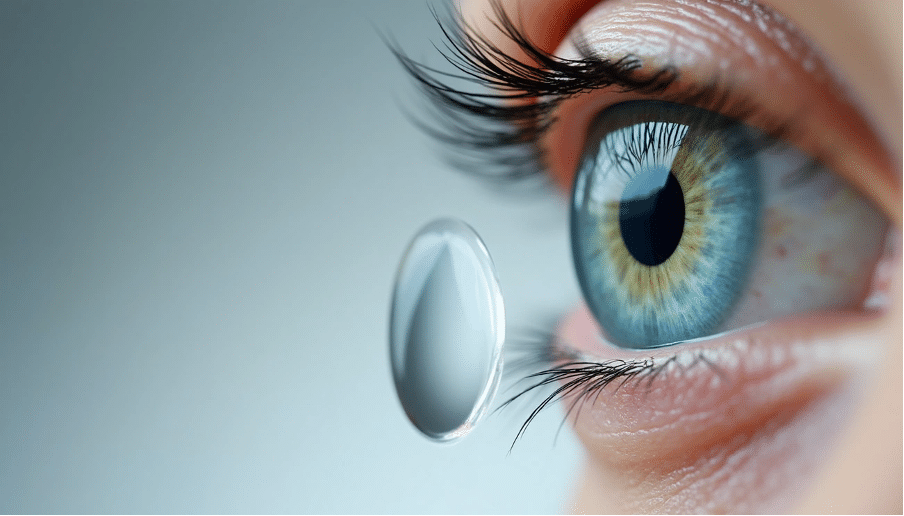
Right side: the edge is smooth and curves inward like a small bowl.
-
Inside out: the edge flares out like a shallow plate.
-
-
Some natural color contact lenses also have tiny marks or numbers near the edge. You can check the leaflet for details.
If you feel sharp pain, strong discomfort or tearing right after putting it on, take it out, check for inside‑out or dust, clean it with solution, and try again.
3. Step‑by‑step guide to putting on colored contacts (beginner friendly)
Here is a simple step‑by‑step routine that most beginners can follow:
-
Wash and dry your hands thoroughly.
-
Open the blister pack (for your first practice, starting with daily lenses can be easier).
-
Place the lens on your fingertip and confirm it is the right side.
-
Use the other hand to gently lift your upper eyelid, then pull down your lower eyelid.
-
Look straight ahead or slightly upward and gently place the lens onto your iris.
-
Slowly release your eyelids and blink a few times to help the lens settle.
-
Wait 1–2 minutes and check how it feels. If there is no strong foreign body sensation or pain, you are good.
You can practice with one eye first. If anything feels really wrong, don’t force it. Take the lens out, clean and check it, or simply rest your eyes.
4. How to remove lenses safely and what to do if you “can’t get them out”
Many people are more afraid of “not being able to remove the lens” than of putting it in.
In fact, as long as you are gentle and your fingertips are dry enough, removal is usually straightforward.
Basic steps for removing lenses:
-
Wash and dry your hands (this is always step one).
-
Look up slightly and pull down your lower eyelid with your middle finger.
-
Use the pads of your thumb and index finger to gently pinch the lower edge of the lens and let it slide off.
-
Place the lens in your palm, clean it with solution (for yearly/monthly lenses), then store it in a clean case with fresh solution.
Common “I can’t remove it” situations and tips:
-
Eyes are too dry: use a few drops of lubricating eye drops, blink, then try again.
-
Fingers are too wet or slippery: dry them a little so you can grip the lens more easily.
-
Using too much force: always use soft fingertips, never your nails.
If you have tried many times, your eyes are turning very red or painful, stop and rest. If symptoms continue, visit an eye doctor as soon as possible.
5. Yearly, monthly, daily lenses – wearing time and care
Different replacement cycles require different levels of care, but the core rule is the same:
Do not wear them for too long and never sleep in them.
-
Yearly lenses (HEMA material, around 42% water content):
-
Better for experienced users who can maintain good cleaning habits.
-
Try to limit daily wearing time to around 6–8 hours, depending on your comfort.
-
Clean gently with solution every time after use and store them in fresh solution.
-
-
Monthly lenses:
-
A middle option between daily and yearly lenses, good for frequent wearers.
-
Still need daily cleaning and fresh solution every night.
-
-
Daily disposable lenses (for example, around 55% water content):
-
Each pair is for one‑day use only, no need for cleaning or storing.
-
“Daily” doesn’t mean you can wear them all day or overnight. Usually 8 hours is a good upper limit, then you should throw them away.
-
No matter which type you choose, always follow the recommended replacement cycle on the packaging.
Even the best color contact lenses will become unsafe if they are expired or worn for too long.
6. Habits that can seriously hurt your eyes – avoid them at all costs
To protect your cornea, remember these “never do” rules:
-
Putting in or taking out lenses without washing your hands
-
This brings bacteria, oil, and dust directly to your lenses and eyes.
-
-
Touching the lens or your eye with your nails
-
Nails are sharp and can carry dirt, which can damage the lens surface or even scratch your cornea.
-
-
Wearing lenses for too long or sleeping in them
-
Long wearing time can cause corneal hypoxia, leading to redness, dryness, pain, or more serious issues.
-
Sleeping with lenses on adds much more risk, especially with low‑oxygen lenses.
-
-
Not changing solution for a long time or not replacing lenses on schedule
-
Old solution can become a breeding ground for bacteria.
-
Yearly lenses are not “wear as long as you like”; when the cycle is over, they must be replaced.
-
No matter how good the lenses are, they can’t compensate for bad habits.
Good wearing and cleaning habits are the real key to eye safety.
7. When you should remove lenses immediately and see a doctor
If any of the following happens, remove your lenses right away and consider seeing an eye doctor:
-
Persistent sharp pain, burning sensation, or severe discomfort that doesn’t improve with eye drops
-
Obvious redness, light sensitivity, or continuous tearing
-
Sudden blurred vision or strong halos around lights
-
Symptoms continue or worsen even after you remove the lenses and rest
Do not “wait and see” for too long. Many eye problems are much easier to treat if you act early.
8. Choosing safe brands and trusted sellers
Besides wearing and care habits, choosing the right brand and purchase channel also helps reduce risk.
Here are a few simple tips when you choose natural color contact lenses or look for the best color contacts for brown eyes:
-
Prefer brands with complete certifications, such as FDA, CE, ISO 13485 and multiple country registrations, especially if you need prescribed color contact lenses.
-
Buy from official stores, well‑known e‑commerce platforms, or authorized retailers, not from unknown sources or unsealed bulk products.
-
When you shop for color contact lenses online, look beyond just photos and prices. Check safety information, water content, replacement cycle, and real user reviews.
A brand like Mislens, which has FDA, CE, ISO 13485 and multiple registrations, and is already recognized in overseas markets, can usually offer more stable and safer lenses.
Whichever brand you choose in the end, whether you want a very natural look or the best color contacts for brown eyes, remember: beauty is important, but protecting your eyes is even more important.